Skip to content
In today’s competitive business environment, managing customer relationships effectively is no longer optional it is essential. This is where CRM comes in.
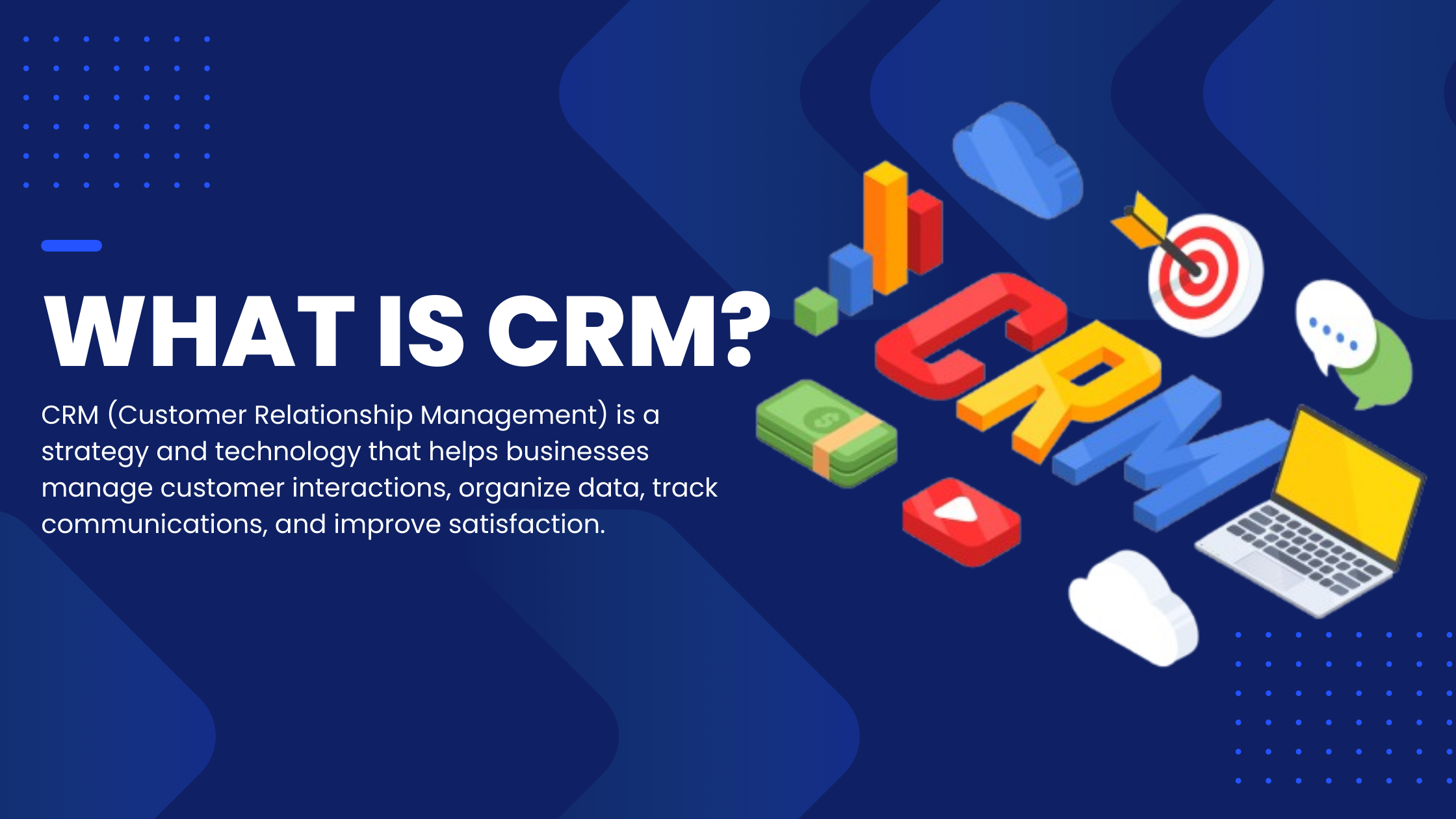
CRM stands for Customer Relationship Management. It is both a strategy and a technology that helps businesses manage interactions with customers, streamline processes, improve profitability, and build long-term relationships.
At its core, CRM is about understanding your customers better who they are, what they need, how they interact with your business, and how you can serve them more effectively.
Modern CRM systems like Zaris CRM bring all customer data into one centralized platform, enabling businesses to manage leads, track sales pipelines, automate workflows, and analyze performance in real time.
Why CRM is Critical for Modern Businesses
Imagine running a business where:
- Customer information is stored in spreadsheets
- Sales teams forget follow-ups
- Emails are not tracked
- Leads are lost
- Reports are inaccurate
- Teams don’t know the status of deals
This is the reality for businesses without CRM.
A CRM system eliminates these problems by centralizing data, automating tasks, and providing visibility across the entire organization.
Key Business Challenges CRM Solves
- Disorganized customer data
- Lack of sales tracking
- Poor customer communication
- Low conversion rates
- Manual administrative work
- Limited business insights
By solving these issues, CRM helps companies scale efficiently.
What Does a CRM System Actually Do?
A CRM system acts as the brain of your customer operations. It collects, organizes, and analyzes customer data to help you make smarter decisions.
Here’s what it typically handles:
1. Contact Management
Stores customer information such as:
- Name
- Phone number
- Company details
- Interaction history
All data is accessible in one place.
2. Lead Management
Tracks potential customers from initial inquiry to closed deal.
You can:
- Assign leads to sales reps
- Monitor lead status
- Score leads based on behavior
- Track communication history
3. Sales Pipeline Management
CRM provides a visual pipeline where you can see:
- Opportunities
- Deal stages
- Revenue projections
- Conversion rates
This improves forecasting and planning.
4. Task & Activity Tracking
Automatically reminds sales teams about:
- Follow-ups
- Calls
- Meetings
- Emails
No opportunity is missed.
5. Automation
Modern CRM systems automate:
- Email responses
- Lead assignments
- Workflow approvals
- Notifications
Automation reduces human error and saves time.
6. Reporting & Analytics
CRM provides real-time reports on:
- Sales performance
- Revenue growth
- Lead sources
- Team productivity
This enables data-driven decision-making.
Types of CRM Systems
CRM systems generally fall into three categories:
Operational CRM
Focuses on automating sales, marketing, and service processes.
Analytical CRM
Concentrates on data analysis and insights for strategic planning.
Collaborative CRM
Enhances communication between departments like sales, marketing, and support.
Zaris CRM combines operational efficiency with analytical insights, making it a comprehensive business solution.
Who Should Use CRM?
CRM is not limited to large enterprises. It benefits:
- Startups
- Small and medium businesses
- Enterprises
- Real estate agencies
- Healthcare providers
- Educational institutions
- Service-based businesses
Any organization that manages customer relationships can benefit from CRM implementation.
How CRM Improves Customer Experience
Customers expect:
- Quick responses
- Personalized communication
- Consistent service
- Seamless interactions
CRM makes this possible by:
- Recording every interaction
- Tracking preferences
- Monitoring support requests
- Automating communication
When customers feel understood, loyalty increases.
Real-World Example of CRM in Action
Let’s say a potential client fills out a form on your website.
Without CRM:
- The inquiry may sit in an inbox.
- No one follows up.
- Opportunity is lost.
With CRM:
- Lead is automatically captured.
- Assigned to a sales representative.
- Follow-up reminder is created.
- Communication is tracked.
- Deal is moved through the pipeline.
- Management can monitor progress.
This structured workflow dramatically increases conversion rates.
Strategic Benefits of CRM
Beyond daily operations, CRM helps with:
1. Revenue Growth
Improved lead management increases closing rates.
2. Customer Retention
Better service strengthens long-term relationships.
3. Better Forecasting
Sales predictions become more accurate.
4. Productivity Improvement
Teams spend less time on manual tasks.
5. Business Scalability
Processes become structured and repeatable.
How Zaris CRM Transforms Businesses
Zaris CRM is designed to empower businesses with:
- Advanced lead tracking
- Customizable modules
- Workflow automation
- Real-time dashboards
- Detailed reporting
- Secure cloud-based access
Unlike generic systems, Zaris CRM is built to adapt to your specific business processes.