Skip to content
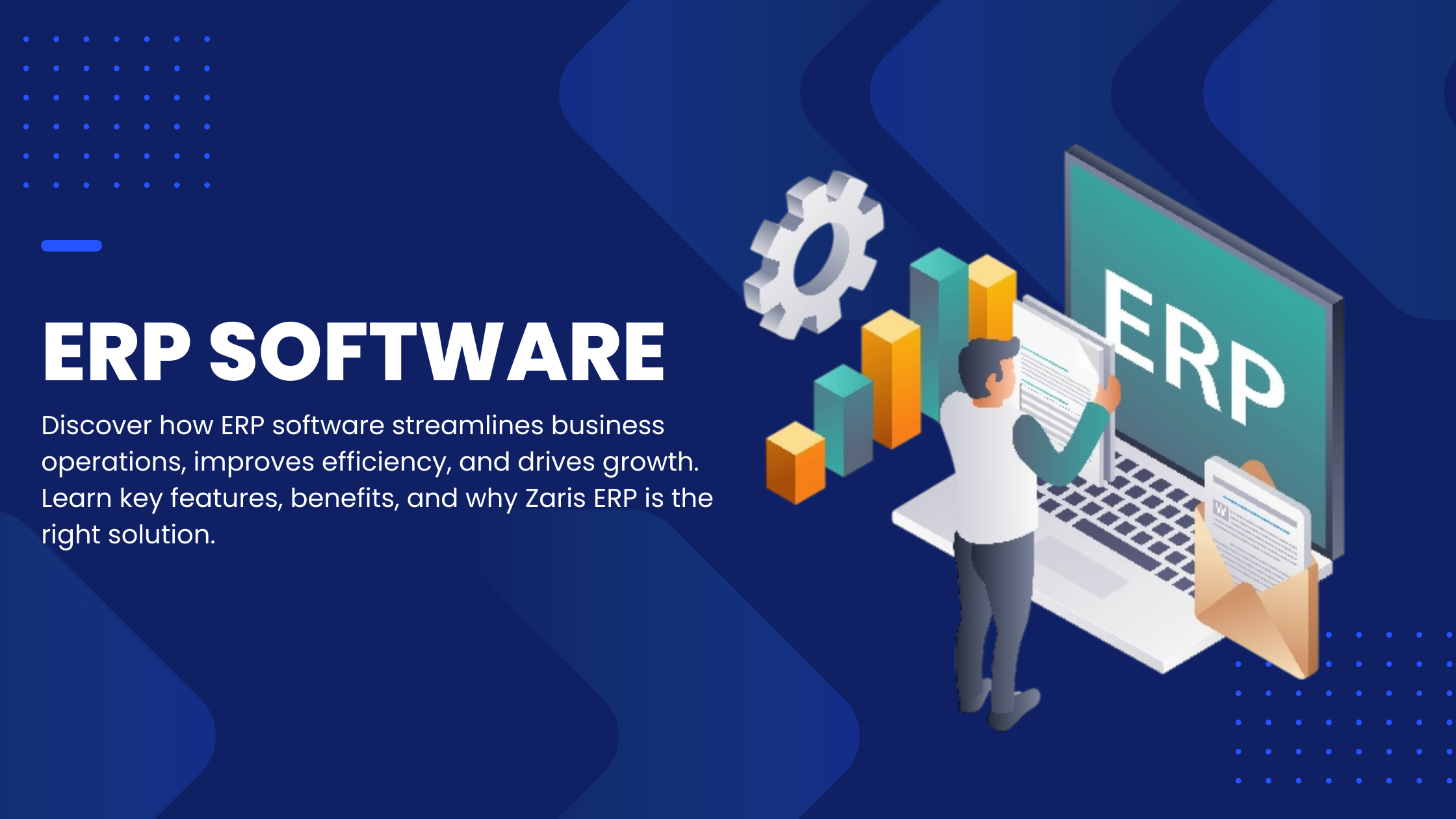
Running a growing business is exciting but it also comes with increasing complexity. As operations expand, managing finance, inventory, sales, HR, and customer relationships through separate systems becomes inefficient and error-prone. This is where ERP software plays a transformative role.
ERP (Enterprise Resource Planning) software integrates core business processes into a single unified system. Instead of using disconnected tools for accounting, operations, and sales, ERP software centralizes data, automates workflows, and provides real-time visibility across the organization.
In this guide, we’ll explore what ERP software is, how it works, its key features, benefits, and why choosing the right solution like Zaris ERP can give your business a competitive edge.
What Is ERP Software?
ERP software is an integrated business management system designed to automate and streamline core processes across departments. It acts as a centralized platform where data from finance, operations, inventory, human resources, procurement, and sales is stored and managed.
Rather than operating in silos, departments share information in real time. This improves collaboration, reduces manual work, and ensures everyone is working with accurate data.
Modern ERP software is typically cloud-based, making it accessible from anywhere and scalable as your business grows.
Why Businesses Need ERP Software
As businesses grow, managing operations manually becomes increasingly challenging. Without a centralized system, organizations often face:
- Data duplication and inconsistencies
- Delayed reporting
- Poor inventory visibility
- Inefficient resource allocation
- Communication gaps between departments
ERP software eliminates these issues by creating a connected ecosystem where all operations work together seamlessly.
Key Features of ERP Software
The functionality of ERP systems may vary, but most modern solutions include the following essential modules:
1. Financial Management
ERP software provides robust accounting tools including general ledger, accounts payable/receivable, budgeting, and financial reporting. This ensures accurate tracking of income and expenses.
2. Inventory & Supply Chain Management
Track stock levels in real time, manage warehouses, monitor procurement, and optimize supply chain processes. This prevents stockouts and overstocking.
3. Sales & Order Management
Manage quotations, orders, invoicing, and payment tracking in one place. This improves order accuracy and speeds up billing cycles.
4. Human Resources Management
Automate payroll, employee records, attendance tracking, and performance management.
5. Reporting & Analytics
Access real-time dashboards and performance metrics to make informed decisions quickly.
6. Workflow Automation
Automate repetitive tasks such as approvals, notifications, and document management to improve efficiency.
Benefits of ERP Software
Implementing ERP software delivers measurable business advantages.
Improved Efficiency
Automation reduces manual data entry and repetitive tasks, allowing teams to focus on strategic activities.
Real-Time Data Access
Decision-makers gain instant access to accurate performance data across departments.
Better Collaboration
Since all departments use the same system, communication improves and operational silos disappear.
Cost Reduction
By optimizing resource usage and minimizing errors, ERP software reduces operational costs over time.
Scalability
Modern ERP systems grow with your business, allowing you to add modules and users as needed.
Enhanced Compliance & Security
ERP platforms provide structured processes and data security controls to maintain compliance and protect sensitive information.
Types of ERP Software
Businesses can choose from different types of ERP solutions depending on their needs:
On-Premise ERP
Installed on company servers. Offers full control but requires higher maintenance costs.
Cloud-Based ERP
Hosted on the cloud, accessible via the internet. It offers flexibility, lower upfront costs, and easy scalability.
Hybrid ERP
Combines both on-premise and cloud capabilities for greater flexibility.
Cloud-based ERP solutions are increasingly popular due to affordability and accessibility.
ERP vs Traditional Systems
Traditional business systems operate independently. For example, accounting software does not automatically communicate with inventory systems.
ERP software, however, connects everything. When a sale is made:
- Inventory updates automatically
- Financial records are adjusted
- Reports reflect real-time data
This level of integration saves time and prevents costly mistakes.
Industries That Benefit from ERP Software
ERP systems are not limited to large corporations. Businesses across industries use ERP software, including:
- Manufacturing
- Retail & E-commerce
- Real Estate
- Healthcare
- Distribution
- Professional Services
- Construction
Small and medium-sized businesses especially benefit from ERP because it brings enterprise-level organization to growing operations.
Challenges in ERP Implementation
While ERP software offers powerful benefits, implementation requires careful planning.
Common challenges include:
- Resistance to change
- Data migration complexities
- Insufficient training
- Poor customization
Choosing a user-friendly and scalable ERP platform significantly reduces these risks.
Why Choose Zaris ERP Software?
Zaris ERP is designed to simplify business management while delivering enterprise-level functionality. It combines operational efficiency with intuitive design, making it suitable for growing businesses.
Here’s what makes Zaris ERP stand out:
1. All-in-One Integrated Platform
Zaris ERP combines CRM, finance, operations, and reporting into one seamless ecosystem. No need for multiple disconnected tools.
2. User-Friendly Interface
Complex systems often slow teams down. Zaris ERP focuses on simplicity and clarity, allowing teams to adapt quickly.
3. Customizable Workflows
Every business operates differently. Zaris ERP allows workflow customization to match your processes.
4. Real-Time Business Insights
Advanced dashboards provide clear visibility into revenue, expenses, operations, and performance metrics.
5. Cloud-Based Accessibility
Access your system securely from anywhere, enabling remote work and flexible operations.
6. Cost-Effective Scalability
Zaris ERP grows with your business without requiring expensive infrastructure investments.
7. Data Security & Reliability
With secure cloud infrastructure and role-based access control, your business data remains protected.
The Future of ERP Software
ERP software continues to evolve with automation, AI-driven analytics, and predictive reporting. Businesses increasingly rely on intelligent systems that not only track data but also provide recommendations for growth.
The future of ERP lies in:
- Smarter automation
- Integrated CRM and ERP solutions
- Enhanced user experiences
- Mobile accessibility
- Data-driven forecasting
Companies that adopt modern ERP solutions position themselves for long-term success.
Final Thoughts
ERP software is no longer a luxury reserved for large enterprises. It has become an essential tool for businesses seeking efficiency, visibility, and sustainable growth.
By centralizing operations, automating workflows, and providing real-time insights, ERP software empowers organizations to make smarter decisions and operate with confidence.
If you’re looking for a powerful yet easy-to-use ERP solution that adapts to your business needs, Zaris ERP offers the perfect balance of flexibility, performance, and scalability.
The right ERP system doesn’t just manage operations it drives transformation.