Skip to content
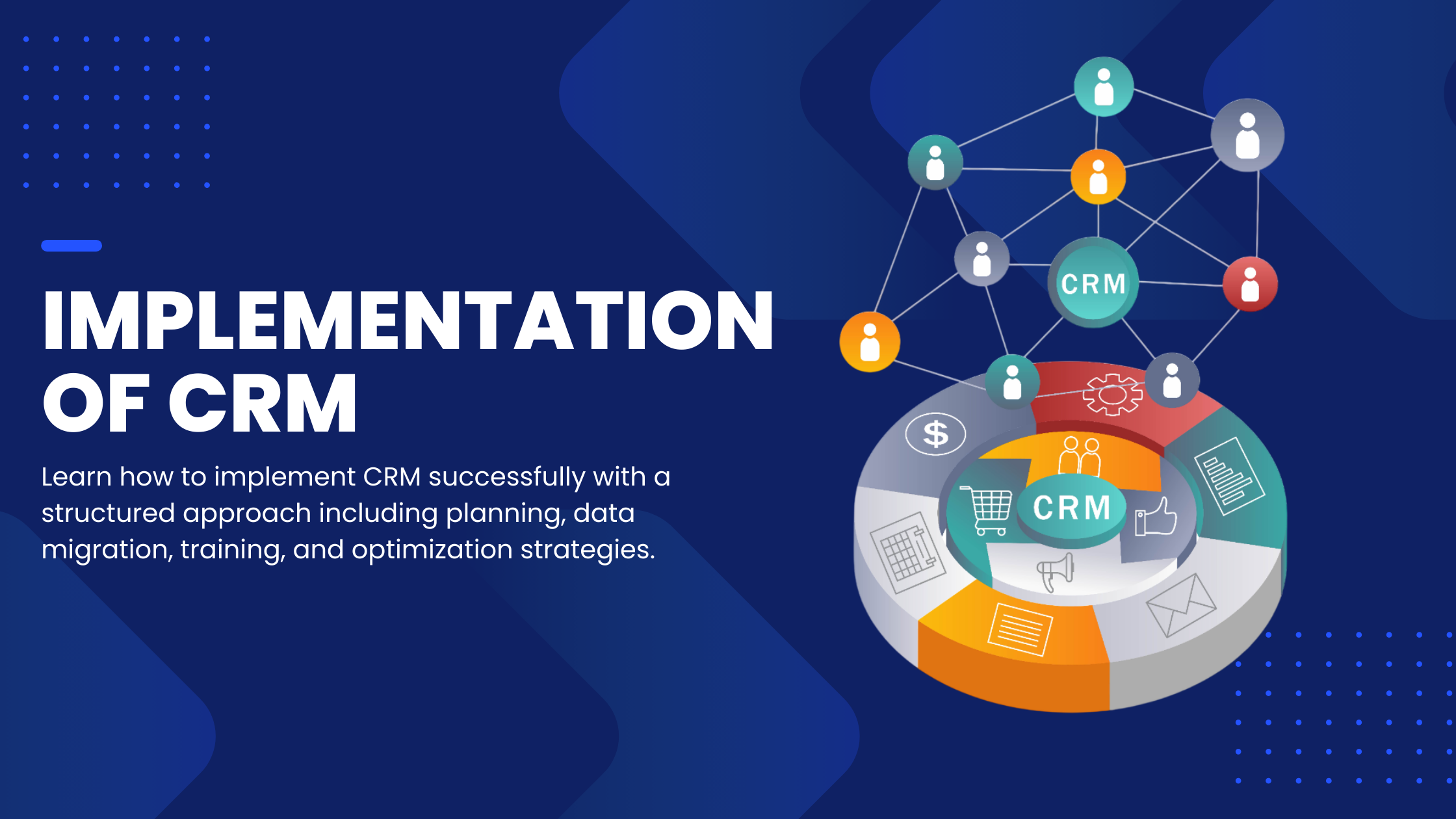
Implementation of CRM
CRM implementation is a strategic process that involves selecting, configuring, and deploying a CRM system to align with business goals.
Successful implementation requires planning, training, and continuous optimization.
Step 1: Define Clear Objectives
Identify:
- Sales challenges
- Customer management issues
- Growth goals
- Reporting needs
Clear objectives guide implementation.
Step 2: Choose the Right CRM System
Evaluate based on:
- Scalability
- Customization
- Ease of use
- Integration capability
- Support services
Zaris CRM offers flexible implementation options tailored to business needs.
Step 3: Data Migration
Transfer:
- Customer data
- Leads
- Contacts
- Deal history
Ensure data accuracy and cleanliness.
Step 4: Customization & Configuration
Configure:
- Workflows
- Modules
- User roles
- Automation rules
- Sales stages
CRM should align with your processes not the other way around.
Step 5: Employee Training
User adoption is critical.
Provide:
- Hands-on training
- Documentation
- Ongoing support
Step 6: Monitor & Optimize
Track:
- User engagement
- Performance metrics
- ROI impact
Continuous improvement ensures long-term success.
Common CRM Implementation Mistakes
- Lack of planning
- Ignoring user training
- Poor data quality
- Overcomplicating setup
Zaris CRM provides onboarding assistance to avoid these pitfalls.
FAQ
How long does CRM implementation take?
It varies depending on business size and complexity.
Why do CRM implementations fail?
Due to poor planning and lack of adoption.