 Skip to content
Tax Management
- Home
- Zaris Features
- Tax Management
Tax Management Module — Setup Guide
Use the Tax Management module to define your company’s taxes and extra charges, then apply them correctly across invoices, quotes, and sales orders.
Go to Settings → Inventory → Tax Calculations to configure and manage your company’s tax setup.
Taxes tab
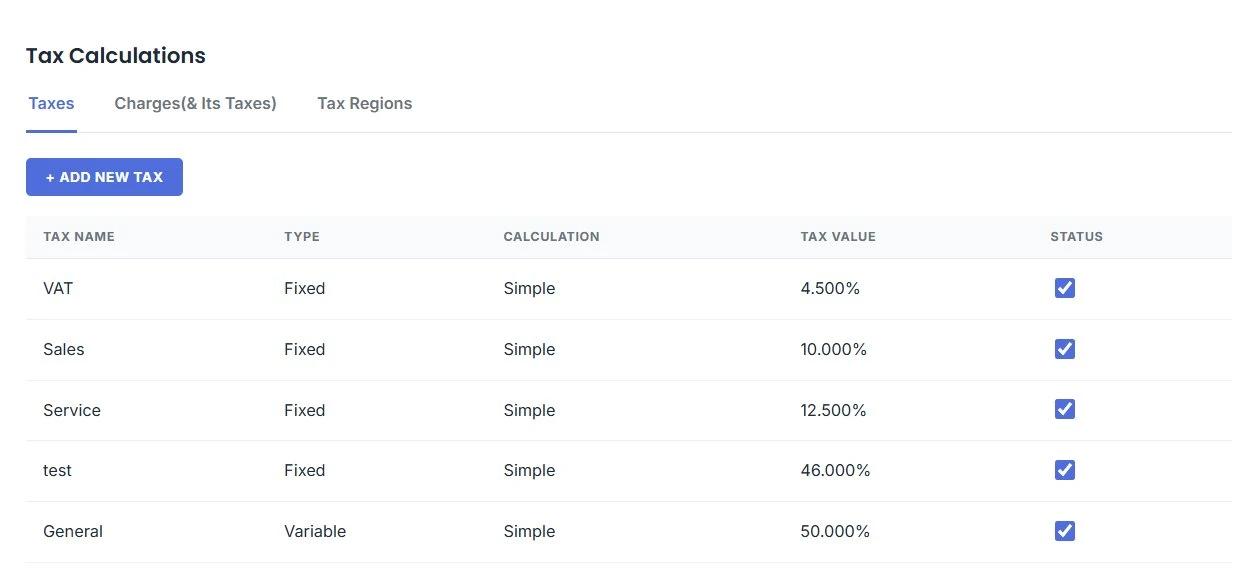
Create Sales Tax, VAT and service taxes with Fixed or Variable types, calculation methods and active status.
Charges & Its Taxes
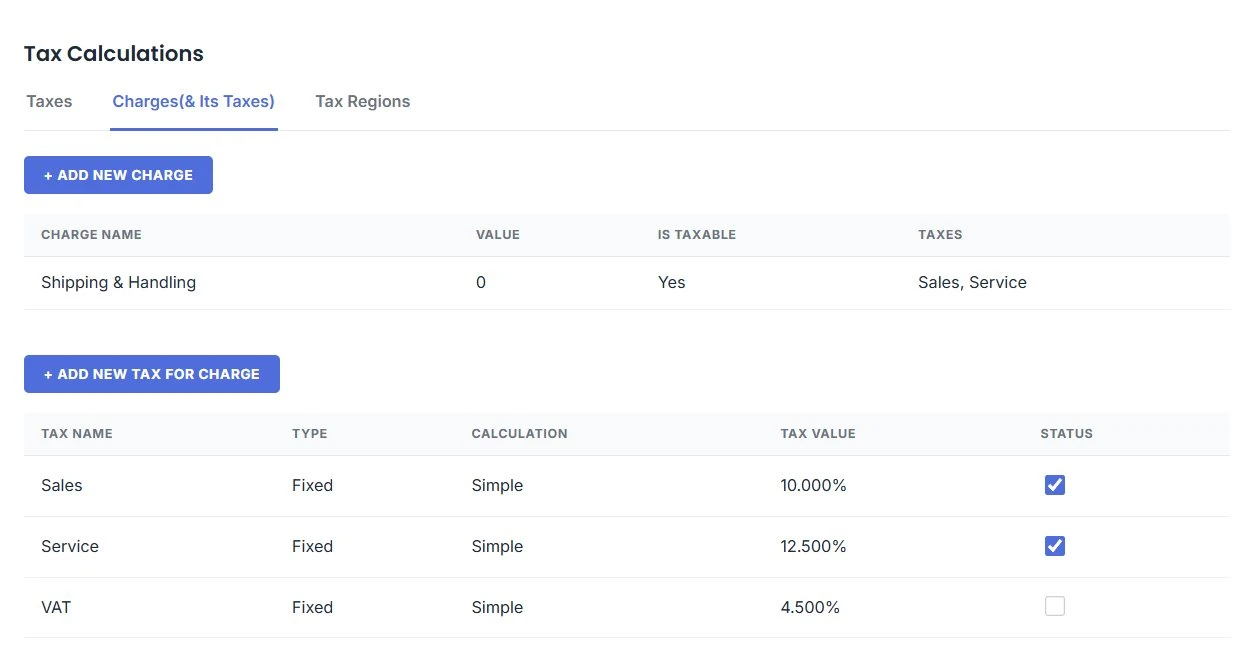
Add shipping and handling charges, mark them taxable, and assign which taxes apply to each charge.
Tax Regions
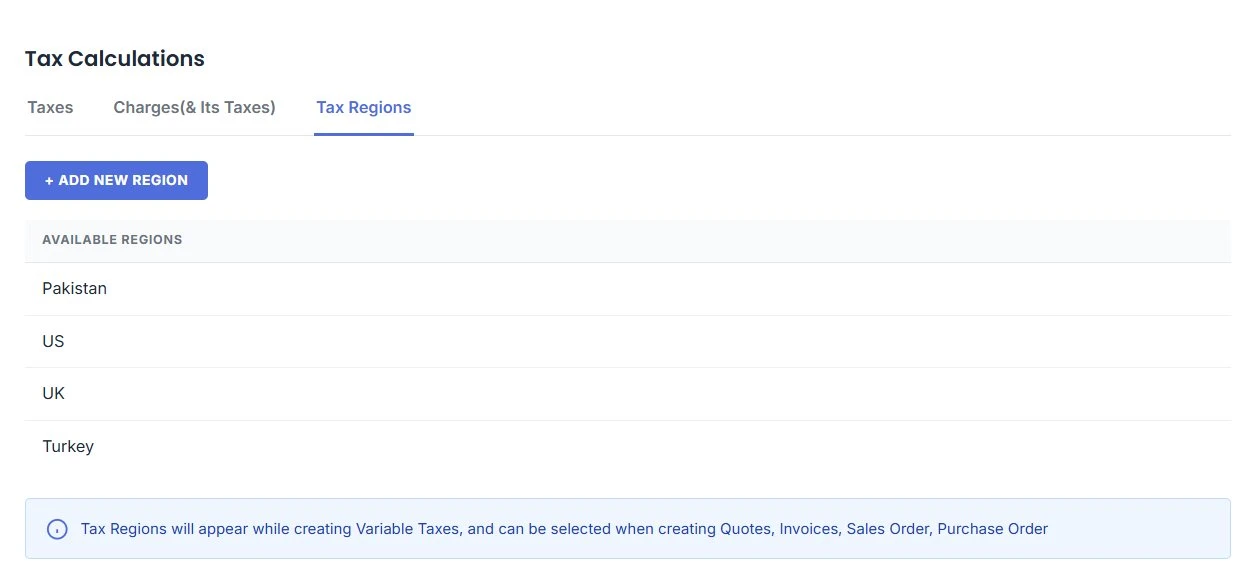
Map variable taxes to countries and territories so quotes and invoices use the correct regional rate automatically.
1. Taxes — Add & Manage Taxes (Sales Tax, VAT, etc.)
This tab is where you create the tax entries your business uses — from standard VAT and sales tax to custom service rates. Each row shows type, calculation method, value and status.
How to add a tax
- Click Add Tax.
- Enter Tax Name (e.g., “Sales Tax”, “VAT”).
- Choose Type: Fixed (flat amount) or Variable (percentage by region/rules).
- Select Calculation Method (e.g., on item price, on subtotal, after discounts).
- Enter Tax Value (percentage or fixed amount).
- Set Status to Active or Inactive, then Save.
2. Charges (& Its Taxes) — Create Extra Charges (Shipping, Handling)
Charges are additional line items that may also be taxable — such as shipping and handling fees. Define the charge, set a default value, mark it taxable, and assign which taxes from the Taxes tab apply.
How to add a charge
- Click Add Charge.
- Enter Charge Name (e.g., “Shipping & Handling”).
- Set a Default Value (fixed amount or percentage).
- Toggle Is Taxable: Yes applies taxes; No skips tax on this charge.
- If taxable, assign Taxes from the Taxes tab, then Save.
3. Tax Regions — Map Taxes to Geographical Areas
Regions let you apply variable and region-specific taxes for example, different VAT rates by country or state. When creating invoices, quotes or orders, the system uses the customer’s region to apply the correct tax automatically.
How to use Tax Regions:
Add a Region (country, state, or territory) — e.g., Pakistan, US – California, UK.
Link applicable Variable Taxes to each region, or specify rate overrides.
When creating invoices/quotes/orders, the system uses the customer’s region to apply the correct tax automatically.
Why this matters:
Regions ensure tax rates are accurate for cross-border sales and local regulations.
They prevent manual errors and speed up document creation.
Best Practices & Quick Tips
Set up taxes confidently with a few simple habits that keep calculations accurate over time.
Start simple
Add common taxes and charges first, then expand as your business and regions grow.
Keep records
Deactivate unused taxes rather than deleting them to preserve historical invoice accuracy.
Test with sample documents
Create a test invoice to confirm taxes and charges calculate correctly before going live.
Document rules
Note calculation methods and region rules in an internal help doc so your team stays aligned.
