Skip to content
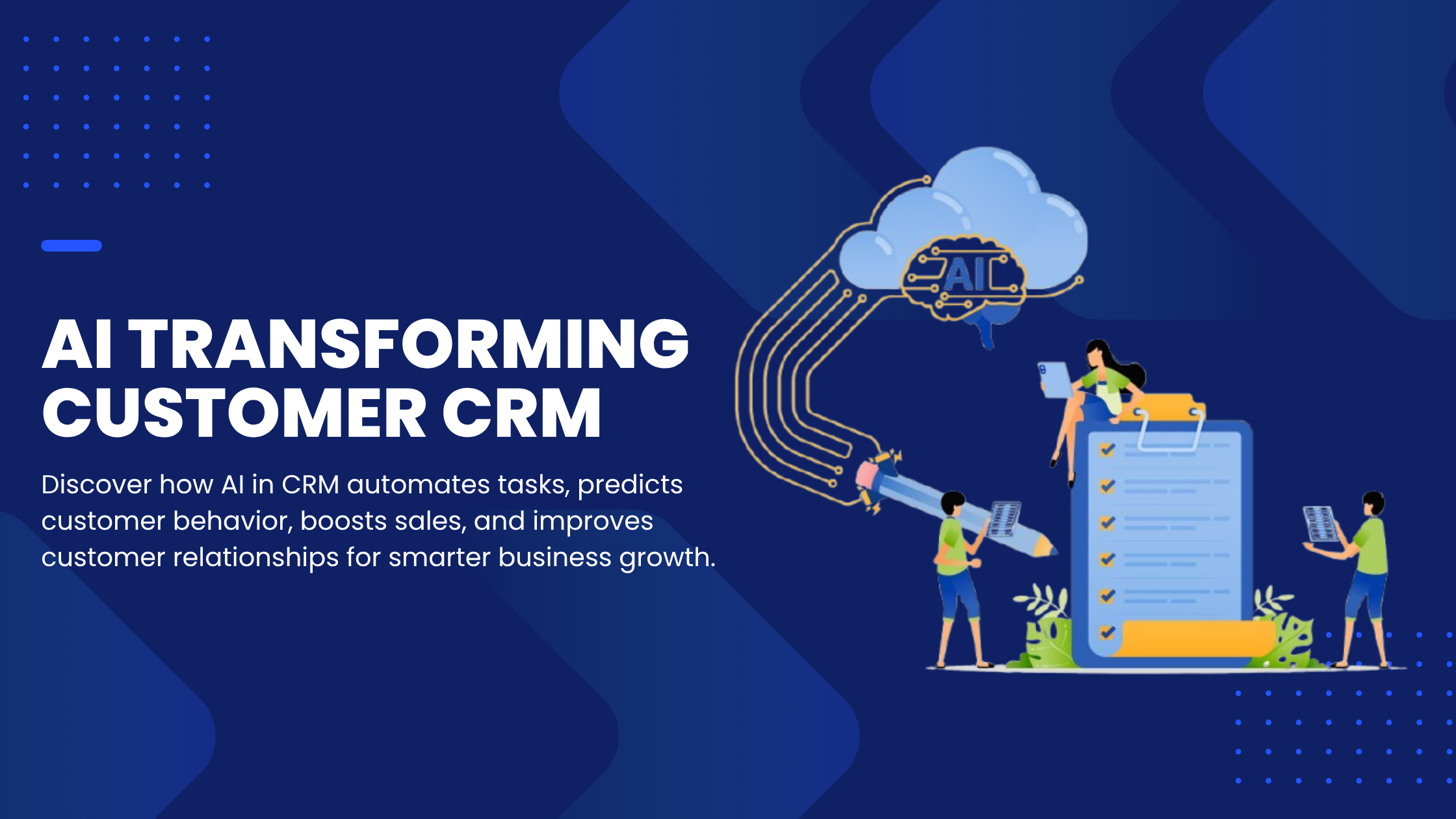
Artificial intelligence has shifted from an emerging capability to a practical business tool. CRM platforms are a clear example of that change. What once required manual data entry, constant follow-up, and educated guesswork can now be handled with intelligent automation and predictive insights. The result is a measurable improvement in sales productivity, customer satisfaction, and operational efficiency.
Businesses adopting AI-powered CRM systems are discovering that success isn’t about replacing employees. It’s about giving sales, marketing, and support teams the information they need to make better decisions, faster. Companies that invest in AI strategically are building stronger customer relationships while reducing administrative work across every stage of the customer journey.
Why AI Has Become Essential in Modern CRM
Modern customers expect quick responses, personalized communication, and consistent experiences across multiple channels. Traditional CRM systems store valuable customer information, but AI transforms that data into meaningful recommendations and automated actions.
Instead of relying solely on historical reports, businesses can anticipate customer needs, identify sales opportunities earlier, and respond before small issues become costly problems.
Business Benefits
- Reduces repetitive administrative work
- Improves sales forecasting accuracy
- Enhances customer engagement
- Supports faster decision-making
- Increases productivity across departments
AI-Powered Automation
Administrative tasks consume a significant portion of a salesperson’s workday. AI automation removes much of that burden by handling repetitive processes that previously required manual effort.
Common automation capabilities include:
- Automatic contact creation
- Meeting scheduling
- Email follow-ups
- Task assignment
- Data entry
- Pipeline updates
- Workflow approvals
For example, when a prospect submits a website form, an AI-enabled CRM can create the contact, assign the lead to the appropriate representative, schedule a follow-up reminder, and send a personalized confirmation email within seconds. Sales representatives spend less time updating records and more time building relationships with prospective customers.
Predictive Analytics Improves Business Decisions
Historical reporting explains what has already happened. Predictive analytics estimates what is likely to happen next.
By analyzing customer behavior, purchasing history, engagement levels, and market trends, AI helps businesses identify patterns that would be difficult to detect manually.
Organizations commonly use predictive analytics to:
- Forecast revenue
- Estimate deal completion rates
- Predict customer churn
- Identify cross-selling opportunities
- Prioritize high-value accounts
Rather than reacting after customers leave, businesses can intervene early with targeted offers or proactive support based on predictive indicators.
AI Chatbots and Virtual Assistants
Customer expectations extend beyond standard business hours. AI-powered chatbots allow organizations to provide immediate assistance while reducing pressure on support teams.
Modern AI assistants can:
- Answer common customer questions
- Qualify new leads
- Schedule appointments
- Route support tickets
- Collect customer information
- Recommend products or services
When conversations become more complex, the chatbot transfers the interaction to a human representative with the full conversation history, creating a smoother customer experience.
Smarter Lead Scoring
Not every prospect is equally likely to become a customer. Traditional lead scoring often depends on fixed rules that fail to reflect changing customer behavior.
AI evaluates hundreds of signals simultaneously, including:
- Website activity
- Email engagement
- Previous purchases
- Industry information
- Buying patterns
- Sales interactions
| Traditional Lead Scoring | AI Lead Scoring |
|---|---|
| Static rules | Continuously learns from new data |
| Limited evaluation criteria | Analyzes hundreds of variables |
| Manual updates | Automatic optimization |
| Reactive decisions | Predictive recommendations |
Sales teams can focus their efforts on prospects with the highest probability of conversion, improving efficiency without increasing workload.
Personalized Customer Experiences
Customers increasingly expect businesses to understand their preferences. AI helps organizations deliver more relevant interactions by analyzing customer behavior in real time.
Personalization can include:
- Customized email campaigns
- Product recommendations
- Dynamic website content
- Personalized promotions
- Customer-specific support suggestions
Instead of sending identical marketing messages to every contact, businesses communicate based on customer interests, previous purchases, and engagement history, increasing both relevance and response rates.
Challenges Businesses Should Consider
Successful AI implementation requires planning, governance, and employee adoption.
- Data quality
- Privacy and regulatory compliance
- System integration requirements
- Employee training
- Implementation costs
- Ongoing performance monitoring
- Human oversight for AI-generated recommendations
AI delivers its greatest value when supported by accurate data and clear business processes.
Best Practices for AI CRM Adoption
Businesses introducing AI into their CRM strategy should focus on measurable outcomes rather than adopting technology for its own sake.
Recommended approach:
- Define clear business objectives.
- Clean and standardize CRM data.
- Start with one or two high-impact automation projects.
- Measure results using performance metrics.
- Train employees alongside implementation.
- Review AI recommendations regularly.
- Expand capabilities based on proven success.
AI CRM Implementation Flow
Implementing AI within a CRM platform is most effective when approached in stages rather than all at once.
Step 1: Define Business Objectives
Identify the specific outcomes you want AI to achieve, such as improving lead conversion, reducing administrative work, or enhancing customer support.
Step 2: Prepare Your CRM Data
Review and clean existing customer records. Accurate, consistent data is essential for AI to generate reliable insights and recommendations.
Step 3: Deploy High-Impact AI Features
Begin with capabilities that deliver immediate value, such as workflow automation, predictive lead scoring, or AI-powered customer support.
Step 4: Train Employees
Ensure sales, marketing, and support teams understand how AI tools work and how to incorporate them into their daily workflows.
Step 5: Measure Performance
Track key performance indicators such as response times, conversion rates, customer satisfaction, and revenue growth to evaluate the impact of AI.
Step 6: Optimize and Expand
Use performance data to refine existing workflows and gradually introduce additional AI capabilities as business needs evolve.
The Future of AI in CRM
Artificial intelligence continues to evolve beyond task automation. Modern CRM platforms are increasingly incorporating generative AI, intelligent sales assistants, conversational analytics, and autonomous workflows that can complete routine tasks with minimal human intervention.
Businesses can also expect improvements in predictive customer journeys, where AI identifies the next best action based on customer behavior and engagement history. Voice-enabled CRM tools, real-time sentiment analysis, and AI agents capable of drafting emails, summarizing meetings, and recommending sales strategies are becoming standard features rather than premium add-ons.
Despite these advancements, AI works best as a decision-support tool. Strategic planning, complex negotiations, and relationship building will continue to rely on human expertise. Organizations that combine AI-driven insights with experienced professionals will be better positioned to deliver consistent customer experiences and adapt to changing market conditions.
Frequently Asked Questions
What is AI in CRM?
AI in CRM uses artificial intelligence technologies such as machine learning and predictive analytics to automate repetitive tasks, analyze customer data, and help businesses make faster, more informed decisions.
Does AI replace sales teams?
No. AI is designed to support sales professionals by reducing administrative work, identifying promising opportunities, and providing actionable insights. Building relationships, negotiating deals, and understanding customer needs remain human responsibilities.
Can small businesses benefit from AI-powered CRM?
Yes. Many CRM providers now offer AI features within entry-level plans, allowing smaller businesses to automate workflows, improve customer service, and increase productivity without significant investment.
How does AI improve lead scoring?
Unlike traditional rule-based scoring, AI evaluates a wide range of behavioral and demographic signals, continuously refining its recommendations as new customer data becomes available.
What challenges should businesses prepare for?
Successful AI adoption depends on high-quality data, employee training, system integration, ongoing monitoring, and compliance with data privacy regulations. Addressing these areas early helps maximize long-term value.
Is human oversight still necessary?
Absolutely. AI provides recommendations based on available data, but important business decisions should always include human judgment, particularly when dealing with customer relationships, compliance, or strategic planning.
Conclusion
Artificial intelligence has become an essential component of modern CRM systems, enabling businesses to automate routine work, improve forecasting accuracy, personalize customer interactions, and prioritize high-value opportunities. When implemented thoughtfully, AI allows organizations to spend less time on manual processes and more time strengthening customer relationships.
The most successful AI initiatives begin with clearly defined objectives, reliable customer data, and a phased implementation strategy. Businesses that combine intelligent automation with experienced decision-makers are better equipped to improve operational efficiency, respond to changing customer expectations, and maintain a competitive advantage in an increasingly data-driven marketplace.