Skip to content
Introduction
Modern sales teams face increasing pressure to generate more leads, respond quickly to prospects, and close deals faster than ever before. However, much of their time is spent on administrative tasks such as updating CRM records, scheduling meetings, writing follow-up emails, and searching for customer information instead of selling.
This is where AI Sales Assistants are transforming the sales process. Acting as intelligent virtual assistants, AI Sales Assistants help sales professionals automate repetitive tasks, prioritize opportunities, provide real-time insights, and guide the next best actions throughout the customer journey.
Rather than replacing sales representatives, AI empowers them to work more efficiently, make smarter decisions, and build stronger customer relationships. By combining Artificial Intelligence with CRM data and business automation, organizations can improve productivity, shorten sales cycles, and increase revenue.
What Are AI Sales Assistants?
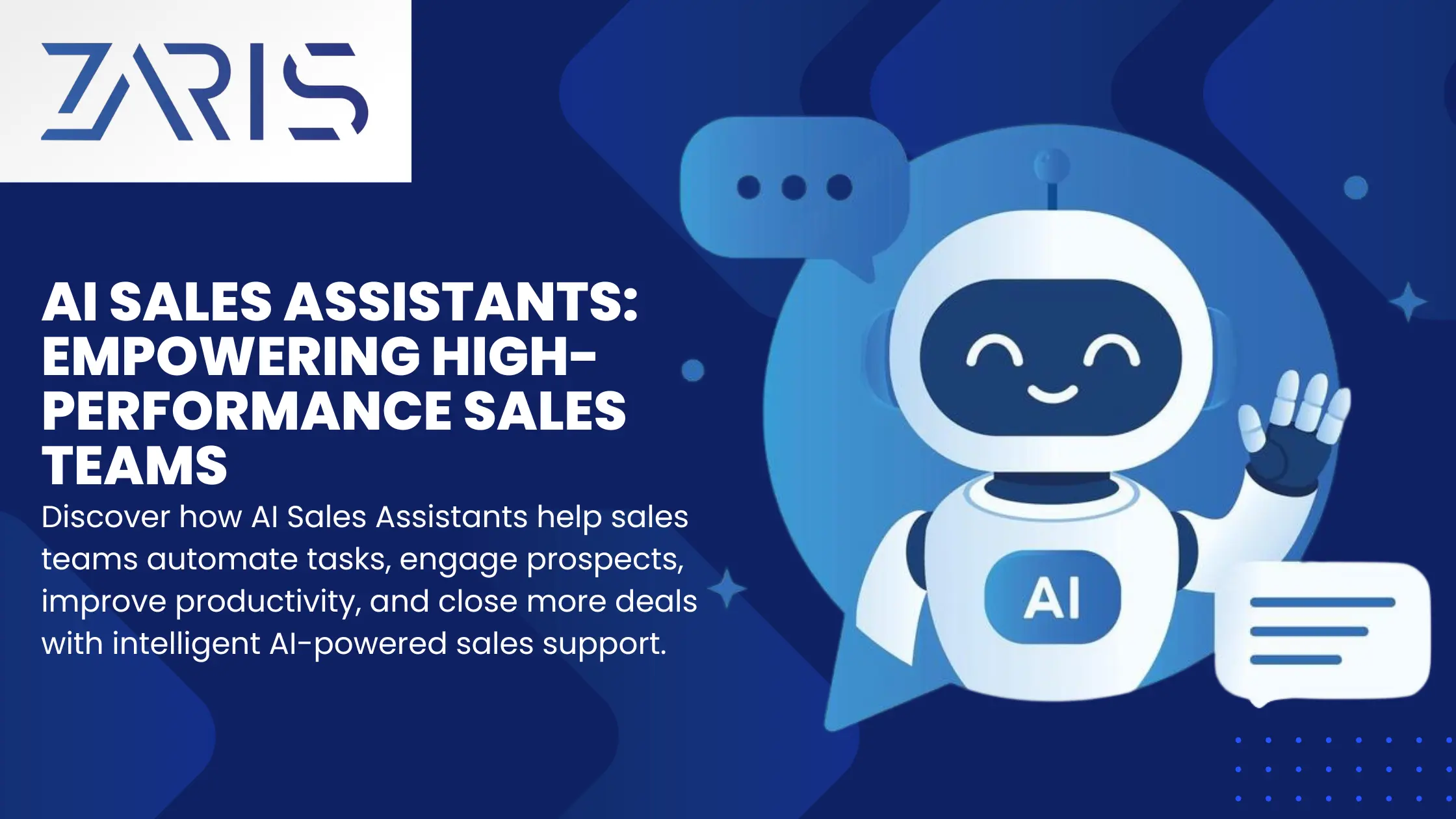
AI Sales Assistants are AI-powered digital assistants designed to support sales teams throughout the entire sales process. They analyze customer data, automate routine activities, recommend actions, and provide valuable insights that help sales representatives focus on closing deals.
Unlike traditional sales tools, AI Sales Assistants continuously learn from customer interactions, sales history, and business data to deliver personalized recommendations and automate time-consuming tasks.
They can assist with:
- Lead qualification
- CRM updates
- Email drafting
- Meeting scheduling
- Follow-up reminders
- Sales forecasting
- Customer insights
- Opportunity management
- Proposal generation
- Pipeline monitoring
Why Businesses Need AI Sales Assistants
Sales teams spend a significant portion of their workday on administrative tasks rather than engaging with customers. This reduces productivity and often results in delayed follow-ups or missed opportunities.
AI Sales Assistants help businesses:
- Reduce manual data entry
- Improve lead response times
- Increase sales productivity
- Keep CRM data accurate
- Deliver personalized customer interactions
- Improve sales forecasting
- Reduce repetitive work
- Increase conversion rates
With AI handling routine activities, sales professionals can dedicate more time to building relationships and closing deals.
Key Features of AI Sales Assistants
Intelligent Lead Prioritization
AI analyzes customer behavior, engagement history, and buying signals to identify the most promising leads. This allows sales teams to focus on high-value opportunities first.
Automated CRM Management
AI Sales Assistants automatically log calls, emails, meetings, notes, and customer activities into the CRM, ensuring records remain accurate and up to date.
Smart Follow-Up Reminders
Never miss an important opportunity. AI automatically schedules reminders, follow-up emails, and tasks based on customer interactions and sales stages.
AI-Powered Email Assistance
AI can generate personalized email drafts, suggest subject lines, summarize previous conversations, and recommend the best response based on customer history.
Meeting Scheduling
AI integrates with calendars to automatically schedule demos, consultations, and follow-up meetings, reducing the time spent coordinating appointments.
Sales Forecasting
By analyzing pipeline data and historical performance, AI predicts future revenue, identifies potential risks, and helps managers make informed business decisions.
Real-Time Sales Insights
AI provides actionable insights during the sales process, including customer engagement levels, buying intent, and recommendations for the next best action.
Benefits of AI Sales Assistants
Increase Sales Productivity
Sales representatives spend less time on administrative work and more time engaging with customers and closing deals.
Faster Response Times
AI instantly responds to inquiries, schedules follow-ups, and alerts sales teams about high-priority opportunities.
Better Lead Conversion
By prioritizing qualified leads and ensuring timely communication, businesses can improve conversion rates and maximize revenue.
Improved Customer Experience
Customers receive faster, more personalized communication, creating stronger relationships and higher satisfaction.
Accurate Sales Forecasting
AI-driven analytics provide greater visibility into pipeline performance, helping businesses plan resources and revenue more effectively.
Consistent Sales Processes
AI ensures every lead follows a structured sales process, reducing inconsistencies and improving overall efficiency.
Common Use Cases
AI Sales Assistants can support organizations across many industries.
SaaS Companies
- Qualify inbound leads
- Schedule product demonstrations
- Send onboarding information
- Track customer engagement
Real Estate
- Respond to property inquiries
- Recommend listings
- Book property viewings
- Follow up with buyers automatically
Healthcare
- Schedule consultations
- Manage patient inquiries
- Send appointment reminders
Financial Services
- Assist with loan inquiries
- Schedule advisor meetings
- Guide customers through application processes
Professional Services
- Qualify new clients
- Generate proposals
- Schedule consultations
- Track ongoing opportunities
How AI Sales Assistants Work
A typical AI Sales Assistant follows this workflow:
- Capture leads from websites, emails, or marketing campaigns.
- Analyze customer behavior and buying intent.
- Score and prioritize leads automatically.
- Recommend the next best action for sales representatives.
- Schedule meetings and follow-ups.
- Update CRM records automatically.
- Monitor sales pipeline progress.
- Generate reports and sales insights.
This intelligent workflow helps teams respond faster and manage opportunities more effectively.
Best Practices for Implementing AI Sales Assistants
To achieve the best results:
- Keep CRM data accurate and organized.
- Define clear sales workflows.
- Personalize automated communications.
- Integrate AI with CRM, email, and calendar platforms.
- Monitor AI recommendations and performance.
- Train sales teams to collaborate with AI tools.
- Continuously optimize workflows based on analytics.
Combining AI automation with human expertise creates the most effective sales process.
The Future of AI Sales Assistants
As Artificial Intelligence continues to evolve, AI Sales Assistants will become even more intelligent and proactive. Future capabilities will include autonomous lead nurturing, predictive deal analysis, voice-enabled sales support, AI-generated proposals, real-time coaching during customer calls, and deeper integration with CRM and ERP systems.
Businesses that adopt AI-powered sales assistance today will be better positioned to improve customer engagement, accelerate growth, and remain competitive in an increasingly digital marketplace.
Frequently Asked Questions
What are AI Sales Assistants?
AI Sales Assistants are intelligent software solutions that automate sales tasks, provide customer insights, manage CRM activities, and help sales teams improve productivity and close more deals.
Can AI Sales Assistants integrate with CRM software?
Yes. Most AI Sales Assistants integrate with popular CRM platforms to manage contacts, update records, schedule follow-ups, and track sales activities automatically.
Do AI Sales Assistants replace sales representatives?
No. They support sales teams by automating repetitive work and providing intelligent recommendations, allowing representatives to focus on customer relationships and closing sales.
Are AI Sales Assistants suitable for small businesses?
Absolutely. Small businesses can use AI Sales Assistants to improve efficiency, automate routine tasks, and compete with larger organizations without expanding their sales teams.
What industries benefit from AI Sales Assistants?
AI Sales Assistants are valuable for SaaS, healthcare, real estate, finance, manufacturing, retail, education, professional services, and many other industries.
Conclusion
AI Sales Assistants are transforming the way businesses manage sales by combining intelligent automation with data-driven decision-making. From qualifying leads and automating follow-ups to updating CRM records and forecasting revenue, AI empowers sales teams to work more efficiently and focus on what matters most building relationships and closing deals.
As customer expectations continue to rise, organizations that embrace AI Sales Assistants gain a competitive advantage through faster response times, improved productivity, better customer experiences, and scalable sales operations.