Skip to content
Introduction
Businesses today are under constant pressure to improve efficiency, reduce operational costs, and deliver faster customer experiences. Traditional automation can handle repetitive tasks, but it often struggles with decision-making and adapting to changing situations. This is where AI Agent Development is transforming modern businesses.
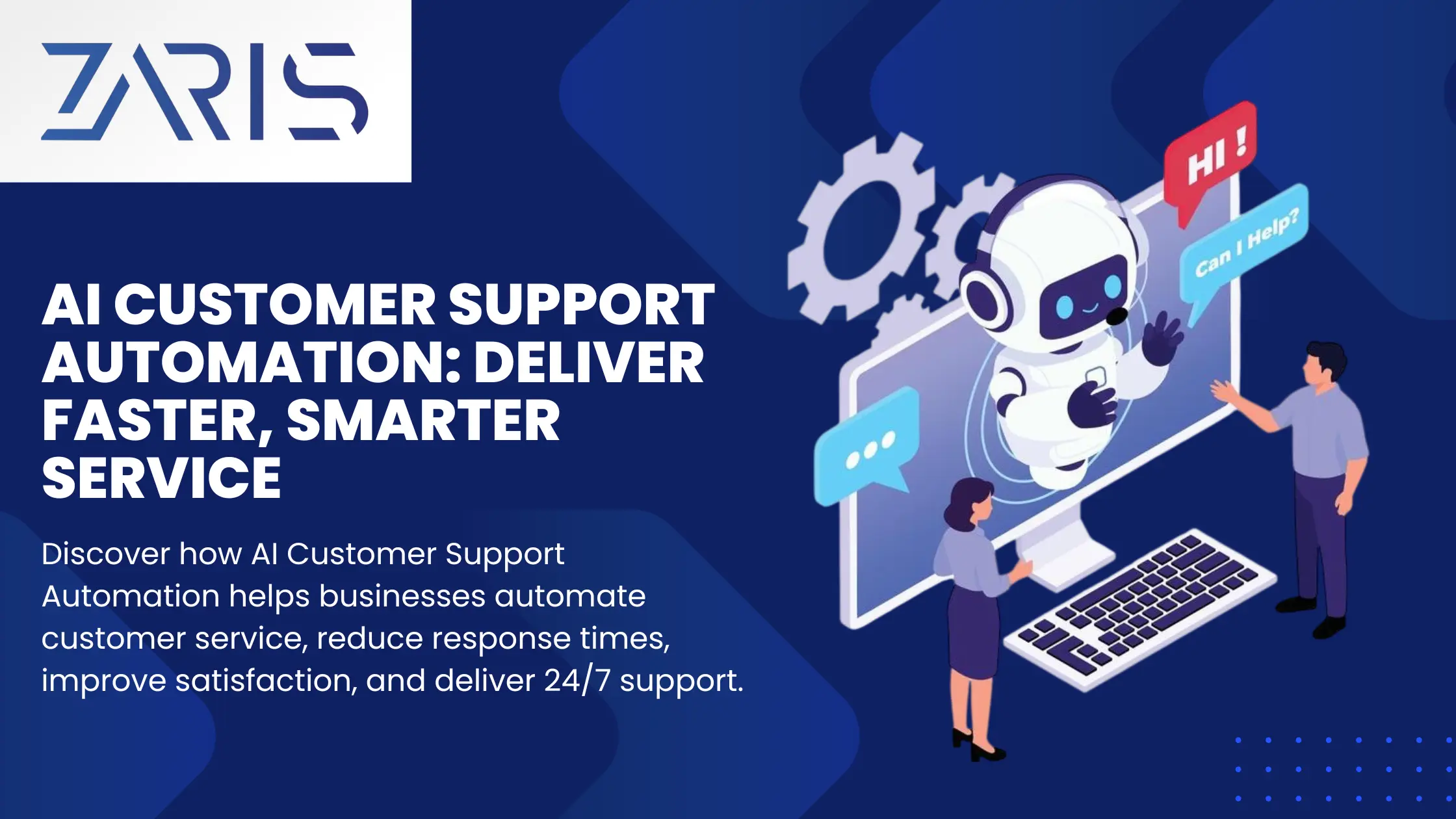
AI agents act as intelligent digital employees capable of understanding requests, analyzing information, making decisions, and completing tasks with minimal human intervention. They can manage customer interactions, automate business workflows, support employees, and integrate with existing business systems to improve productivity across departments.
What Is AI Agent Development?
AI Agent Development is the process of designing and building intelligent software agents powered by Artificial Intelligence, Large Language Models (LLMs), and machine learning. Unlike traditional chatbots, AI agents can perform complex tasks, reason through problems, interact with multiple applications, and continuously learn from new information.
AI agents can:
- Answer customer and employee questions
- Automate repetitive business processes
- Analyze business data
- Schedule meetings and appointments
- Generate reports
- Manage CRM and ERP tasks
- Execute workflows across connected systems
They work like virtual employees that are available 24/7 without requiring constant supervision.
Benefits of AI Agent Development
Businesses invest in AI agents because they deliver measurable improvements in efficiency and customer service.
Increased Productivity
AI agents automate repetitive work, allowing employees to focus on strategic and high-value tasks.
Faster Decision-Making
By analyzing large amounts of data instantly, AI agents provide recommendations and complete tasks much faster than manual processes.
Lower Operational Costs
Automating routine activities reduces the need for repetitive manual work while improving overall efficiency.
24/7 Availability
AI agents never take breaks, ensuring continuous support for customers and internal teams.
Improved Accuracy
AI minimizes human errors by following predefined business rules and using real-time data to complete tasks consistently.
Common Business Use Cases
AI agents can be deployed across various departments, including:
- Sales: Qualify leads, schedule meetings, update CRM records, and assist sales representatives.
- Customer Support: Resolve inquiries, create tickets, and escalate complex issues.
- Human Resources: Answer employee questions, assist with onboarding, and manage leave requests.
- Finance: Process invoices, generate reports, and monitor financial workflows.
- Operations: Automate approvals, assign tasks, and coordinate business processes.
Key Features of AI Agents
Modern AI agents offer advanced capabilities that go beyond simple automation:
- Natural language conversations
- Intelligent decision-making
- CRM and ERP integration
- Workflow automation
- Multi-platform support
- Real-time data analysis
- Task execution across multiple systems
- Continuous learning and improvement
- Secure user authentication
- Detailed reporting and analytics
How AI Agents Work
AI agents follow a simple yet powerful workflow:
- Receive a request from a user or business system.
- Understand the request using Natural Language Processing (NLP).
- Access relevant business data from integrated applications.
- Analyze the information and determine the best action.
- Execute the task automatically.
- Return results and learn from the interaction to improve future performance.
Why Businesses Need AI Agents
As businesses grow, managing operations manually becomes increasingly difficult. AI agents help organizations scale efficiently by automating repetitive tasks, improving response times, and ensuring consistent service delivery.
Whether handling customer inquiries, managing internal workflows, or supporting decision-making, AI agents enable teams to accomplish more with fewer manual processes.
The Future of AI Agent Development
AI agents are rapidly evolving from simple assistants into autonomous digital workers capable of collaborating with employees, managing complex workflows, and making intelligent business decisions. As AI technology advances, organizations will increasingly rely on AI agents to enhance productivity, improve customer experiences, and drive digital transformation.
Conclusion
AI Agent Development is redefining business automation by creating intelligent digital employees that can think, learn, and perform meaningful tasks across multiple business systems. By integrating AI agents into sales, customer support, HR, finance, and operations, organizations can streamline workflows, reduce costs, and improve overall efficiency.
Businesses that invest in AI agents today are building a smarter, more scalable, and future-ready organization capable of adapting to the demands of tomorrow’s digital economy.